
Creating better Product Roadmaps
Creating a good product roadmap involves understanding your company strategy, listening to customers, and aligning goals with stakeholders. In this article, I will guide you on 5 steps.

1. Understand Business Strategy
When trying to understand a business, it's important to look beyond its purpose. By understanding these things, we can work better in the direction of the company's goals and make smart decisions to help it succeed.
The establishment of objectives and performance indicators inside of a company is significantly influenced by its business model. In this framework from BMI Lab, the business model is divided into 3 areas: Value Proposition, Value Chain, and Revenue Model.
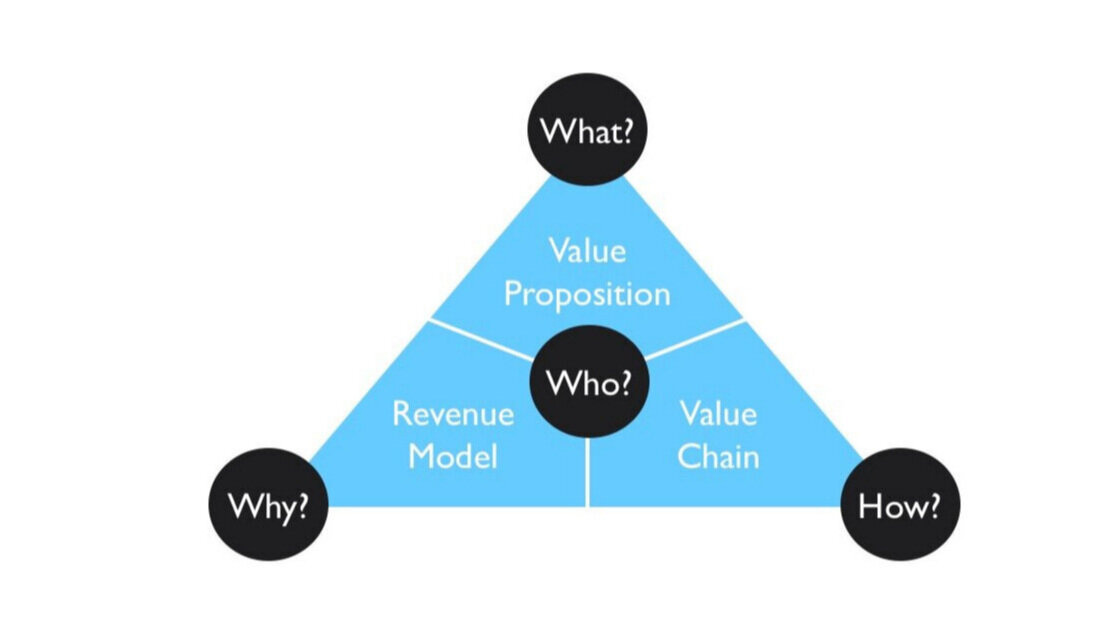
These questions must be addressed:
What are its primary competitive advantages?
Who is the target audience or primary clusters?
How the company is delivering the value proposition?
What are the channels, processes, and activities needed to deliver the value proposition?
How does the company sustain itself financially?
What constitutes its revenue streams?
A business model explains how a company creates, delivers, and earns money from what it offers. It's a guide that shows how everything works together to make the business successful and sustainable.
2. Gather customer feedback
The second step involves collecting input directly from customers to understand their experiences, problems faced, and needs.
Feedback from internal teams: Using internal teams to collect and analyze feedback. Talk to the Customer Experience team to understand the main pain points and requests that are currently in progress. When having a Sales and Operations team, can also be the source to provide feedback from customers and their motivations to understand what users are feeling and their motivations.
Researches and surveys: Conducting, and analyzing research and surveys to gather structured feedback and insights from customers.
Reviews in stores: Analyzing reviews left by customers on app stores or online platforms where the company's products or services are available.
NPS: Utilizing the NPS methodology, to understand how likely customers are to recommend the company's product to others, and to collect quantitative feedback on customer satisfaction.
In this step, try to balance insights and data to get a complete view. Don't just focus on one source.
3. Set goals and align with stakeholders
Understand the current key performance indicators, how the product performs, and what are the main strengths and opportunities. Try to set goals balancing business indicators and customer feedback. Keep the goals focused, starting with 1-3 is a good idea. Make sure your stakeholders agree with the goals and are committed to achieving them, depending on the context you are this is not easy, so try to be resilient and empathetic. Adjust your communication style to match theirs. This will be helpful when creating a roadmap that everyone can easily understand, ensuring smooth progress tracking.
4. Build the Roadmap
Normally roadmaps are built guided by two main approaches:
Bottom-up approach: The Roadmap is created by product teams, considering input and feedback from several teams. It prioritizes initiatives and tasks based on their perceived impact and feasibility from the team responsible for developing the initiatives. This is the format I believe product teams should work in, having a deep understanding of the customer pains and needs and the business strategy priorities, with autonomy to make better decisions to build the roadmap.
Top-down approach: The roadmap is created based on the strategic direction defined by executive leadership. It describes the broad goals and priorities of the organization, with initiatives and projects from this top-level vision. This method is usually employed by traditional companies that have hierarchical decision-making processes.
In both formats or something in between them, you will find these 3 lanes, Company Strategy, Product Strategy, and Product Roadmap.
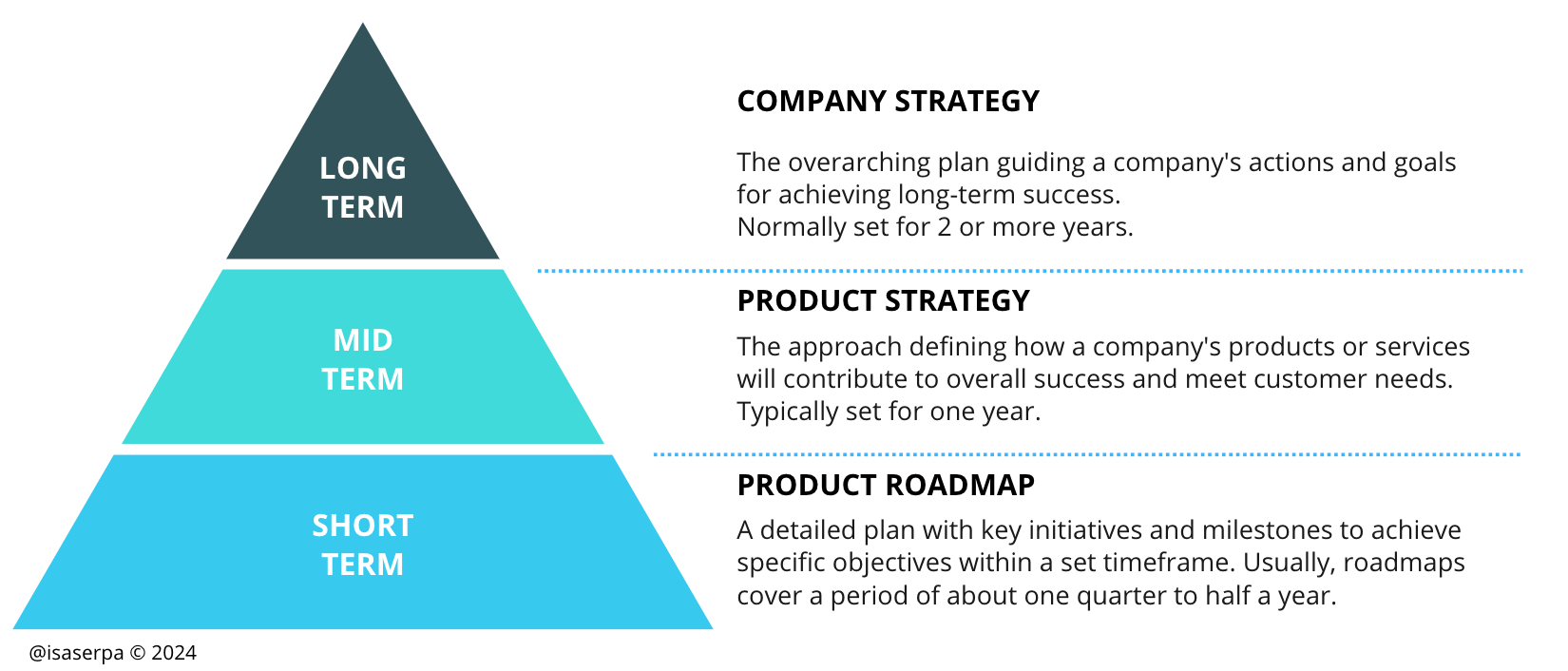
The company's strategy consists of a long-term vision, presenting where the company wants to be in 2 years or more. Some companies work with a 5-year plan. The product strategy includes the product vision, goals, and how the products and services enable the company's strategy. The product roadmap illustrates tactical plans detailing how the product delivers value to achieve the product goals.
To present the roadmap you can use the Product Roadmap framework below available in Miroverse.

5. Review Roadmap
It's important to communicate and review the roadmap. In my experience, it mainly consists of three elements: Format, Frequency, and Feedback. Understanding the best formats: a presentation, a message in a Slack channel, a private message, or a meeting to discuss topics. It will depend on your stakeholders' preferences and habits. The frequency, if it will be daily, weekly, bi-weekly, or monthly, must be reviewed and iterated. Also, feedback is important for improvement, iteration, and making the process more efficient.
I hope you've found your way here, and I trust that this article has helped you in some way.